Cultivating Compassion for the Outsider

In a time where humanity still so frequently engages in Us Vs. Them ideology, to be inclusive is
to be defiant. Recognizing that the “other” is worthy of love and care is not a new concept, but it continues to be radical. Whether the “Them” is new or rehashed, exclusion sows division, not
harmony.

Unitarian Universalism, like many faith traditions, values compassion for outsiders.
Compassion for outsiders is not named explicitly in our Shared Values, but it is implicit
throughout. I believe living out our values is the core of Unitarian Universalism. Cultivation
implies preparation or practice, it means DOING something.

We can prepare by looking inward, examining our biases and motivations. As a currently
able-bodied, cisgender, heterosexual, white man with social and economic resources, I am the
type of person who has, historically, done quite a lot of “othering.” Like many, I began doing the inner work as a young adult in college. I took a few classes on “Women’s and Gender Studies,” participated in student-led groups like the Gay-Straight Alliance. I learned a lot about privilege. Conversations with friends and participating in events like Take Back the Night rallies made me realize how radically different women’s lives are from mine, how there are daily fears that never even entered my mind. I learned, often from friends with different lived experience, about Queer Culture, Black Culture, the immigrant experience and more. My point is not to tout my own enlightenment, but to share that self-reflection and listening to others who are different from me was most of my journey.

To put this work into practice in the wider community often requires getting outside one’s comfort zone. Groups exist that are doing work and serving all manner of populations. Seek them out, listen to them, and learn what they want from you. Prison Ministry, mainly letter-writing as a pen pal, is my work of choice today. By communicating directly with incarcerated individuals, I have learned that a human connection and just being heard are so desperately needed. The parts are simple, but the connection can be challenging when trying to recognize the humanity of someone who did something inhumane. Recognizing their humanity, truly, is at the center of compassion for the outsider. It is both the journey and the destination.

~Ian Van Sice
Posted in Cultivating Compassion | Tagged , | Leave a comment

The Compassion in Interdependence

I am completely sold on the idea of interdependence. I have seen and continue to see how nothing of what I do and am is solely the product of my own doing. I have been supported, helped, hurt, understood, protected, exposed, driven, rejected, and accepted by so many other people in my life, and each of those actions, some I loved and some I hated, have all had a shaping effect on my life. 

It’s just so much easier to want to see my life woven into a web of beauty, support, joy, harmony, peace, kindness, and the like than it is to see that the tapestry of my being includes other things that are not so sweet. There are people in the world and in my life right now who are doing and supporting horrible things, and I am at a loss for what to do except to grieve, and to be angry, and to worry, and to resist them, their ideas, and their actions. If I am honest, all of that is also weaving into who I am. What I resist matters in being who I am just as what I embrace matters. They both help me see and grasp a little more of the truth. 

My experience of compassion invites me to consider your suffering, allows me to experience suffering together with you, requires me to notice your suffering, conjures my curiosity about how I might respond to your suffering, and calls me to be courageous in league with you about the suffering we hold together. 

It strikes me rather harshly but realistically, that my experience of compassion requires me to remember the good in life and to hold those who have forgotten the good. Here is what I am wrestling with that, for compassion’s sake. When I encounter someone who is bent on cruelty and hatred, I am trying to hold them as one whose inner sense of goodness has become lost to them. And here’s how I pray. I acknowledge the spot of good left in that person, and I ask the Spirit of Love and Compassion to touch it, to renew it, and to call it back into that person’s memory and life. It’s my way of contributing to the tapestry of who they are because, like it or not, they are contributing to the tapestry of who we all are. How are you wrestling with the compassion in interdependence?

~Bob Patrick

Posted in Cultivating Compassion | Tagged | Leave a comment

The Compassion in Generosity

Do you know someone who would give you the shirt off their back? It’s an old saying. I had a grandmother who fit that description. The best way I can describe her is this way: if she became aware that anyone was in need of something, and she had that something, she gave them that something. Without blinking (as far as I can tell). She and my grandfather never had a lot of money. They worked hard for everything. I know that my grandmother lived through the Great Depression, and I suspect that the experience lent itself to her generosity, but a lot of people lived through the Great Depression, and they did not all become generous. 

I think that compassion changes what generosity means. The word “generosity” is built off of original words that meant noble birth. The idea was that people of the nobility had great (usually inherited) wealth, and they could afford to give out of their wealth to those who were poor. Our Unitarian Universalist value of generosity has been changed by the infusion of compassion. Our experience of compassion invites us to consider each other’s suffering, allows us to experience suffering together with one another, requires us to notice our suffering, conjures our curiosity about how we might respond to our suffering, and calls us to be courageous in league with each other about the suffering we hold together. 

We choose to be generous in life because we recognize the suffering of others as our own. We understand that we belong to one another, and the act of generosity flows from that. A generous act flows from what we see when we look at each other. When I see myself in you, being generous to you is like breathing. I breathe because I am alive. I am alive because I breathe. 

My grandmother was not a Unitarian Universalist, but she felt the suffering of others, and it didn’t take her long to reach into herself and her life in order to alleviate that suffering. That kind of compassion driven generosity is a wealth of a different kind.

~Bob Patrick

Posted in Cultivating Compassion | Tagged | Leave a comment

The Compassion in Pluralism

At first glance, pluralism is a “cold” term for me. My encounter with the word came along at a time when it was being used publicly to try and get people to put up with and tolerate differences in each other that they didn’t understand and were not willing to make much effort to know about. Pluralism, to me, felt like personal detente, which, by the way, was our national attempt to manage tensions between the US and the then Soviet Union. Necessary but not neat.

If I look closer, though, there is a real warmth, even a fire, built into pluralism. It begins in my own experiences of not being understood and being punished for it. It could be something as simple as showing up with a southern accent or being relatively quiet in a crowded gathering. “He doesn’t sound very smart.”  “He doesn’t have much of a social life.” “He never speaks–thinks he’s too good for the rest of us.” After overhearing those kinds of things about myself, my interior response was something like “ouch.”

How do I find myself responding to the way people speak their home-grown English? How do I interpret another person’s solitude or social behaviors? What conclusions do I jump to around silence and sound in another person? I can choose to struggle with those questions because of my own experience, or I can join the crowd and make judgments about another human being which really only serve to make me feel better in the moment. Pluralism requires work.

My experience of compassion invites me to consider your suffering, allows me to experience suffering together with you, requires me to notice your suffering, conjures my curiosity about how I might respond to your suffering, and calls me to be courageous in league with you about the suffering we hold together. 

Finding the compassion in pluralism means your sound and your silence, your social behavior and your solitude can have a place within our common human experience. And, finding compassion in pluralism will require me to struggle–to be honest about my own suffering, and what may be yours.

~Bob Patrick

Posted in Cultivating Compassion | Tagged | Leave a comment

Compassion: Suffering Together

Compassion is a word that we use a lot as Unitarian Universalists both in every day conversations directing and guiding our ethical practices and attitudes and in our attempts to address the Divine as “Spirit of love and compassion.”

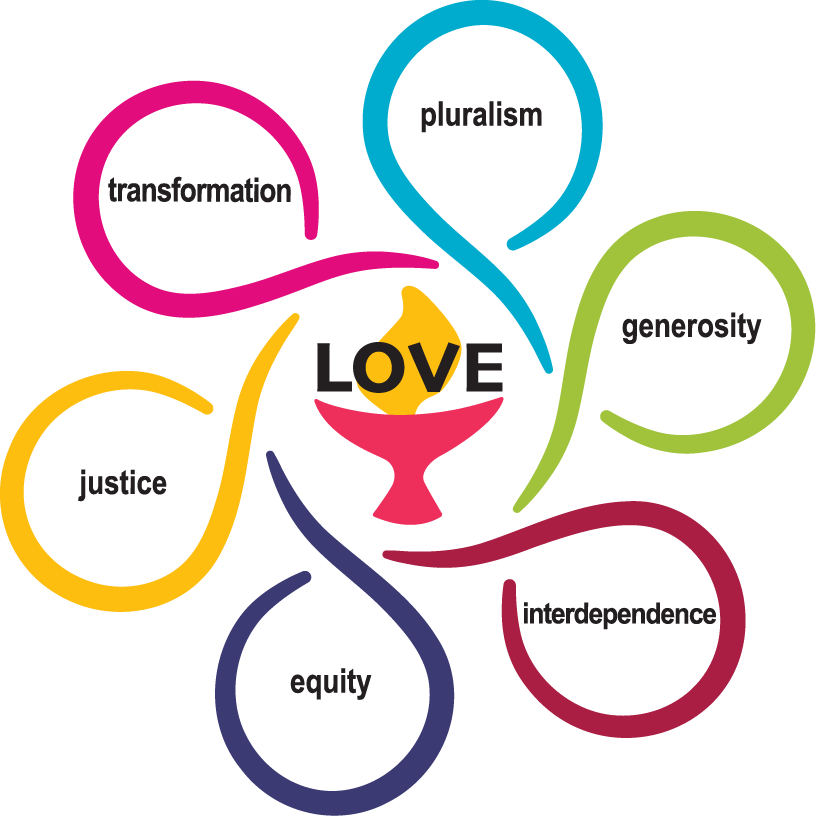
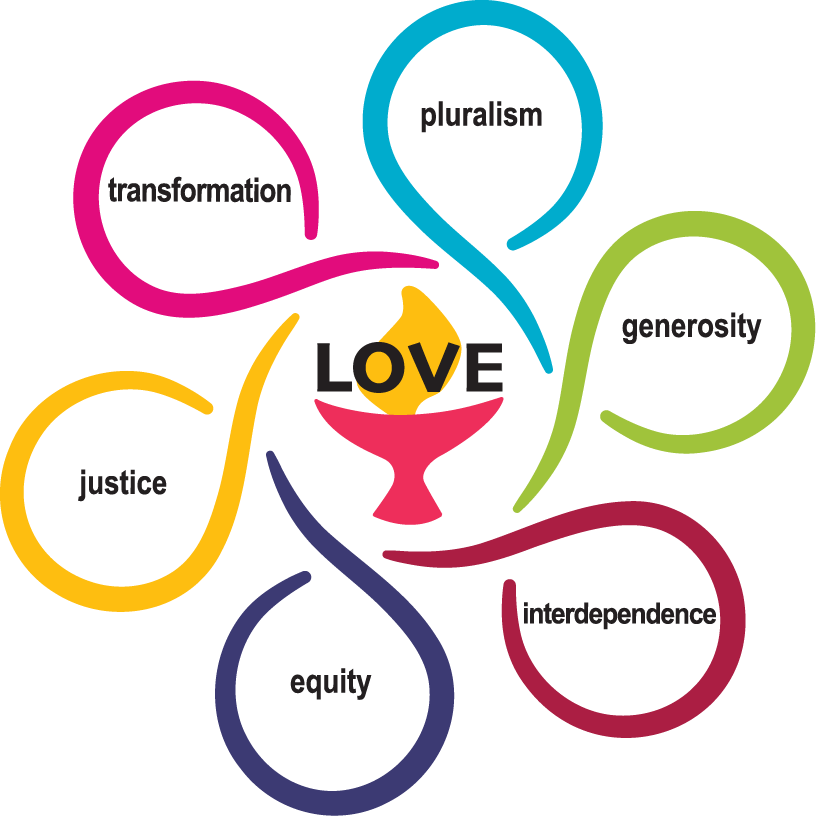
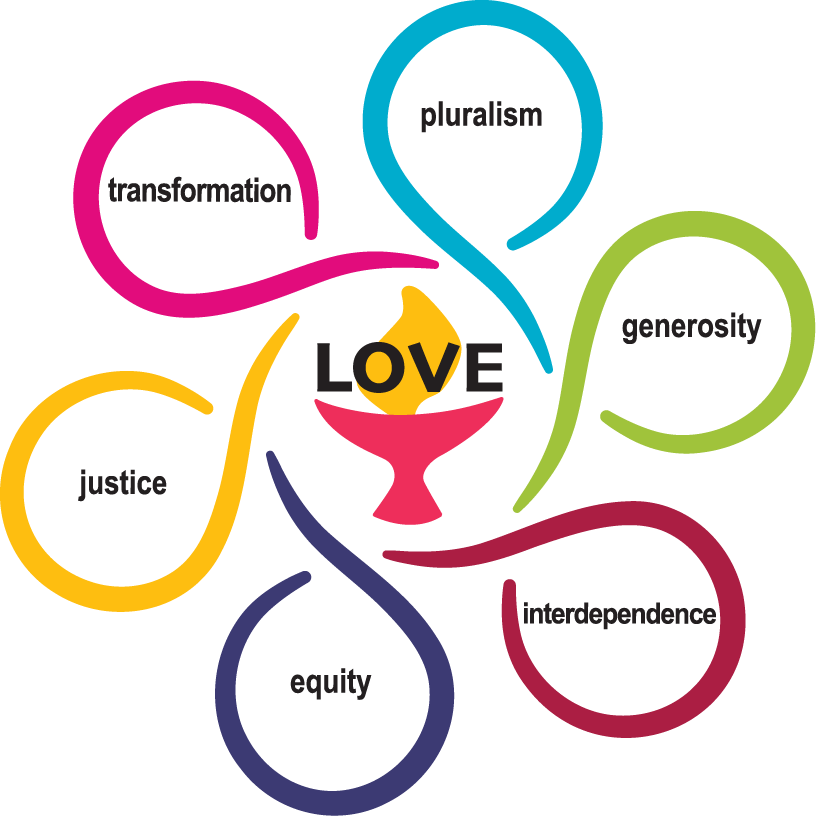
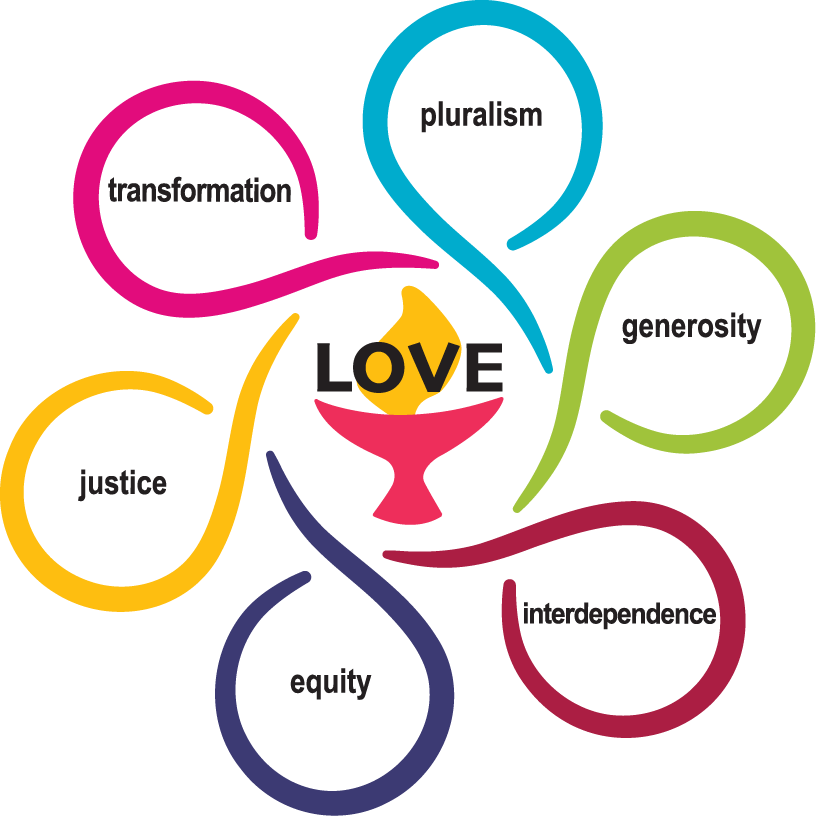
Compassion is an important word to us, and so it should come as no surprise that we are giving the entire month of October to the theme of “Cultivating Compassion.” Consider our Unitarian Universalist values: justice, equity, transformation, pluralism, interdependence and generosity. At the center of those six values is love itself, and there is a sense in which compassion is a key ingredient in each of those seven values. 

Compassion is a word, though. And, like all our other words, especially nouns, it is an attempt by speakers of this language to give a name to an experience. What is the experience of compassion? When I say or think the word compassion, I almost instinctively reach to put a hand over my heart. I connect the word compassion to heart-felt experiences between me and other human and other beings. I suspect that I am not alone in this. And, there is more to the experience of compassion. 

The word itself is made up of old French and Latin roots that mean “to suffer together with” another being. I don’t immediately think of suffering when I use the word compassion, but when I look into that feeling in my heart, it almost always contains some experience of my own suffering. My experience of compassion invites me to consider your suffering, allows me to experience suffering together with you, requires me to notice your suffering, conjures my curiosity about how I might respond to your suffering, and calls me to be courageous in league with you about the suffering we hold together. 

Compassion involves my experience of suffering and becomes a kind of co-suffering when I see it in others. It invites, allows, requires, conjures and calls me to you and to other beings who suffer. When we look at compassion this way, it may be one of the most powerful experiences that we can have. It becomes a way of life.

~Bob Patrick

Posted in Cultivating Compassion | Tagged | Leave a comment

Belonging

When thinking or talking about belonging we often think of it in terms of our relationships
with other humans. This is reasonable, since we ourselves are humans and our interactions or lack thereof with others of our species make up an enormous part of our life. I believe this sometimes obscures a different kind of belonging that is just as profound and important. For we belong to this planet and all the things that live beneath, within, and above it. In a larger sense we belong to the cosmos our planet inhabits. It has become cliché to say but it is a truth grounded in science that we are star stuff. Every animal and plant and stone are all made of the same exact components that we are. We have all evolved in the same place and watched the same stars move through our skies for millions of years.

When I was a little girl my very first friends were the trees in our small orchard and a horse that lived next door. There weren’t many kids that lived nearby and so before my sister was born I fell quite naturally into befriending the world around me. Bambi, my equine companion from the next yard, would stand with his head over the fence and nuzzle me with his soft brown muzzle. True, I sometimes fed him apples from the orchard, but I always believed he stayed for me and not just the apples. The trees in the orchards themselves were my friends, who showed me their own thinking in the slow, deliberate, quiet way of trees. As I got older and fell in love with science I learned that my childhood instincts were correct: I belonged with and to my non-human friends.

However different we may be as individuals, or as members of different species, there is something we all have in common because we are all children of the earth. We belong to this
earth, and to all the things that live above, upon, and beneath it. I invite you to remember this
extended family we belong to the next time you walk out or spend time with your pet.

~Hannah Thompson

Posted in Building Belonging | Tagged | Leave a comment

Belonging To A Minute In Time

It’s easy (for me) these days to go about collecting bad news. Bad news has many categories in my mind. There is the kind that shows up on NPR as I make coffee. There’s the kind that comes from hearing about someone else’s loss. There’s the kind that comes from a medical report. There’s the kind that comes from mistreatment and hurtful behavior.There’s the trivial kind that comes with weather I don’t like or too many redlights.  

There are more, but you get the picture. 

I don’t want to be a collector of bad news, and at the same time, I don’t want to shove my head in the sand and pretend that these things are not happening. I want to be well informed, and I want to find balance in life as well. 

I’ve started looking for the sweetness in the moment.  I don’t know why I started calling it that.  Maybe it was because all of the bad news left me feeling bitter. If this feeling were a food or drink that tasted bitter, I’d look for some way to sweeten it. And so, I have started looking for the sweetness in the moment. Not a sweetness to pretend the bad isn’t happening, but to remind myself that the bad news is not all there is in the world.

The other day I was standing in line at the grocery store. I could feel an inner grumble starting inside of me. So, I asked: where’s the sweetness in this moment? I immediately tuned in to the conversation going on between the person in front of me and the cashier. The person in front of me was having some physical difficulty managing the moving of items from basket to belt and back into the basket again, and the cashier was being so kind, so generous in helping. There was the sweetness in that moment, and I was witness to it. Another time, it was on a walk, and I was getting hot and sweaty. Where’s the sweetness in this moment? Look up. And so I did. The canopy of trees and the blue sky and the sunlight that has shifted a little more towards blue as fall descends were all magnificent. There was the sweetness in that moment. (I  need to look up more often).

I’ve repeated this a dozen times in the last few days. This simple practice allows me to belong to the moment. The sweetness of the moment. I like to imagine that every time I do that, I’m a co-builder of belonging in this world, even one so bent on bad news.

~Bob Patrick 

Posted in Building Belonging | Tagged | Leave a comment